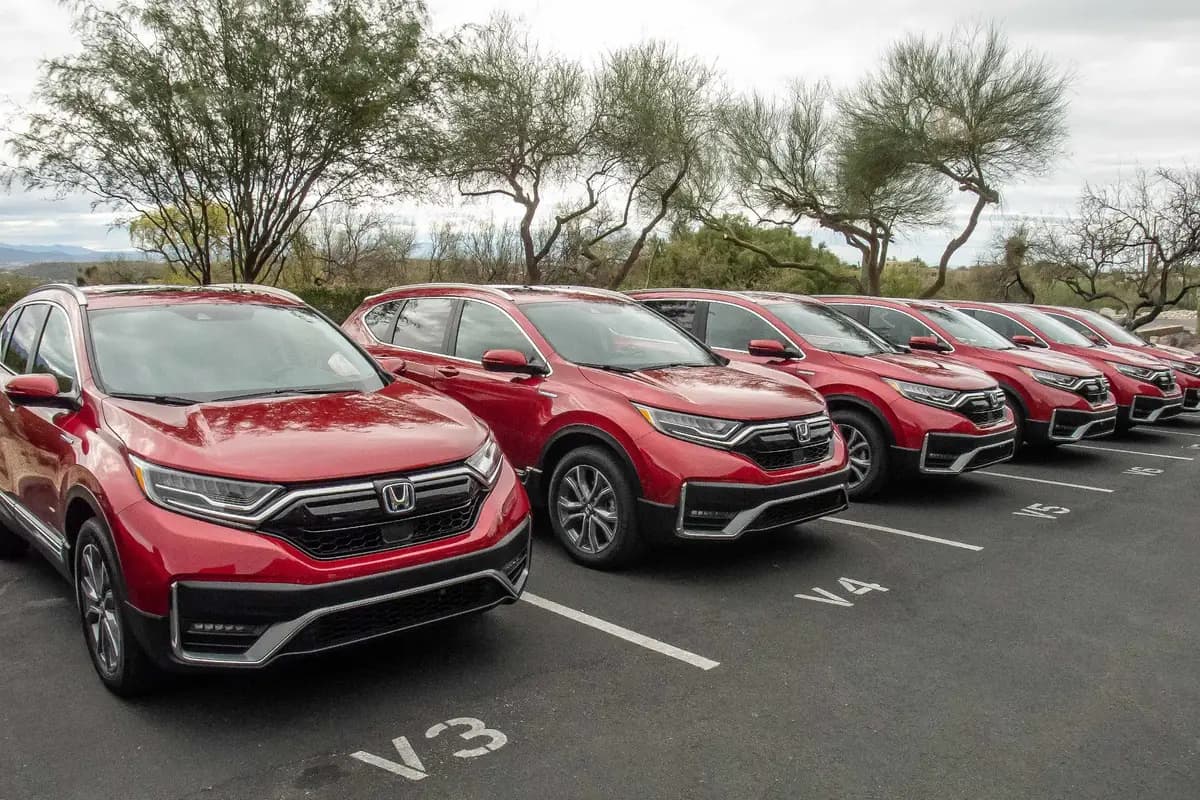
Buying a fleet vehicle can be a practical way to acquire a car for business use, expand an existing vehicle inventory, or source vehicles for commercial operations. However, whether it is a good investment depends on the vehicle's condition, maintenance history, purchase price, intended use, and long-term operating costs.
For businesses, fleet vehicles can offer a cost-effective route to expanding transportation capacity. For dealerships, resellers, and fleet operators, purchasing used fleet cars may also create opportunities to acquire vehicles in larger quantities through established supply channels.
Before making a decision, buyers should understand what a corporate fleet vehicle is, how fleet cars differ from privately owned vehicles, and which costs deserve the most attention.
This article explains the advantages and disadvantages of buying a fleet vehicle, how to evaluate new and used options, and what businesses should consider before purchasing.
What Is a Corporate Fleet Vehicle?
A corporate fleet vehicle is a car, van, pickup truck, or other vehicle owned, leased, or managed by a business or organisation for operational purposes. Companies use fleet vehicles for employee transportation, sales visits, deliveries, customer services, logistics, and other business activities.
Corporate fleets can include passenger cars for executives and employees, commercial vehicles for transporting goods, and specialist vehicles designed for specific operational requirements.
The term also covers vehicles previously used by businesses that are later sold into the used-vehicle market. These vehicles may be purchased by dealerships, resellers, other businesses, or individual buyers, depending on their condition and availability.
For B2B buyers, corporate fleet procurement often involves sourcing several vehicles with similar specifications. This can simplify purchasing, inventory planning, and fleet expansion.
GMTI supports businesses looking to source vehicles through its corporate fleet vehicle procurement service, which covers vehicle sourcing, specification matching, order coordination, and international delivery support.
Is It a Good Idea to Buy a Fleet Vehicle?
Yes, buying a fleet vehicle can be a good decision when the vehicle's condition, maintenance records, price, and expected operating costs align with the buyer's needs. However, a fleet vehicle is not automatically a better deal than a privately owned car.
The right decision depends on the vehicle's previous use and how well it was maintained.
A company car used mainly for highway travel may have a different wear pattern from a delivery vehicle that spent most of its time in congested urban traffic. Similarly, a vehicle maintained under a consistent company servicing programme may offer a clearer maintenance history than one with incomplete records.
Before buying, evaluate:
- Maintenance history: Review service records, repair invoices, and available inspection reports.
- Mileage and usage: Consider total mileage alongside the type of work the vehicle performed.
- Mechanical condition: Inspect the engine, transmission, brakes, suspension, tyres, and other important systems.
- Purchase price: Compare the price with similar vehicles of the same age, specification, mileage, and condition.
- Ownership costs: Estimate fuel, maintenance, insurance, registration, and depreciation.
- Intended use: Ensure the vehicle suits your business operations or personal driving requirements.
For businesses buying multiple units, the same checks should be applied consistently across the proposed fleet.
What Are the Advantages of Buying a Fleet Vehicle?
1. Potentially Lower Purchase Costs
Fleet vehicles may be available at competitive prices, particularly when businesses dispose of vehicles in batches or replace their fleets according to planned schedules.
A buyer may find opportunities in used company cars, rental fleet vehicles, or vehicles released by corporate operators. However, savings are not guaranteed. Some fleet vehicles sell at prices comparable to similar privately owned cars, depending on demand, condition, and specification.
Businesses should compare the actual purchase price rather than assuming a fleet vehicle will always be cheaper.
2. Access to Multiple Vehicles
One of the main advantages for B2B buyers is the potential to source multiple vehicles through a single procurement process.
Dealers may use fleet purchases to increase inventory, while rental companies and corporate operators may need several vehicles to expand their operations. Buying multiple units can also make it easier to standardise vehicle specifications across a business.
However, buyers should confirm that each vehicle meets the required condition and specification. A bulk purchase should not replace individual vehicle checks.
3. Potentially Documented Maintenance History
Some corporate fleets follow scheduled maintenance programmes and maintain records of servicing, repairs, and inspections.
When these records are available and complete, they can help buyers understand how a vehicle was maintained and identify recurring issues.
However, fleet ownership alone does not guarantee good maintenance. Buyers should review actual documentation rather than relying on the vehicle's previous corporate use as proof of condition.
4. Consistent Vehicle Specifications
Businesses that purchase vehicles in batches may be able to obtain units with similar models, features, engine configurations, and equipment.
This consistency can simplify driver training, maintenance planning, replacement-part management, and fleet administration.
For example, a company operating vehicles across multiple branches may prefer similar cars to make servicing and operational management more predictable.
5. Opportunities for Business Expansion
Fleet procurement can help businesses increase their transportation capacity without sourcing every vehicle separately.
A delivery company may need additional vehicles to serve new routes, while a dealership may need to expand its available inventory. A structured procurement process can help these businesses evaluate vehicle availability, pricing, and delivery schedules together.
Businesses planning larger purchases can explore GMTI's commercial vehicle supply and export solutions for vans, trucks, pickups, and other vehicles intended for commercial operations.
What Are the Disadvantages of Buying a Fleet Vehicle?
Although fleet vehicles can offer practical advantages, buyers should also consider their potential drawbacks.
1. Heavy Usage and High Mileage
Some fleet vehicles accumulate mileage quickly because they are used daily for business operations. High mileage can increase the likelihood of component wear and upcoming maintenance requirements.
However, mileage should not be evaluated in isolation. A high-mileage vehicle with documented highway use and regular maintenance may be a better purchase than a lower-mileage vehicle with poor servicing records or extensive city driving.
Buyers should examine the vehicle's usage history and current mechanical condition.
2. More Wear on Interior and Exterior Components
Vehicles used by multiple employees or drivers may experience greater wear on seats, steering wheels, door handles, carpets, and other frequently used components.
Commercial vehicles may also show signs of demanding workloads, including worn cargo areas, damaged bodywork, or suspension wear.
A physical inspection can help determine whether this wear is cosmetic or indicates more substantial problems.
3. Potentially Higher Maintenance Costs
Older fleet vehicles may require replacement tyres, brake components, suspension repairs, battery replacement, or other maintenance soon after purchase.
These costs can reduce the financial benefit of an attractive purchase price.
Before buying, obtain an independent inspection where practical and request repair estimates for any identified issues. Buyers purchasing multiple vehicles should also budget for the possibility that several units may need maintenance at the same time.
4. Limited Customisation
Fleet vehicles are often purchased according to standard specifications selected by the original operator. As a result, a buyer may not find every preferred feature, trim level, or configuration.
For commercial buyers, this can affect operational suitability. For example, a vehicle may have the right body type but insufficient payload capacity or the wrong driving configuration for the intended market.
Confirming specifications before purchase is especially important when sourcing vehicles internationally.
5. Uncertain Resale Value
A fleet vehicle's future resale value depends on its age, mileage, condition, brand, service history, and market demand.
A heavily used vehicle may depreciate more quickly than expected, particularly if it requires substantial repairs or has a specification that is less desirable in the resale market.
Businesses should estimate expected resale value before purchasing rather than assuming the vehicle will retain a particular percentage of its original price.
Is It Bad to Buy a Fleet Car?
No. Buying a fleet car is not inherently a bad decision. The important question is whether the specific vehicle represents good value for its intended purpose.
A well-maintained company car with verifiable service records, reasonable pricing, and a satisfactory inspection can be a sensible purchase. On the other hand, a vehicle with incomplete records, signs of neglect, unexplained damage, or a price that does not reflect its condition may be a poor investment.
Before making a decision, buyers should check:
- The vehicle identification number (VIN) and available history records.
- Service and maintenance documentation.
- Accident, damage, and title history where available.
- Evidence of unusual wear or previous heavy-duty use.
- Mechanical condition and outstanding repairs.
- Applicable inspection, registration, and import requirements.
For international purchases, buyers should also confirm the vehicle's configuration and eligibility for registration in the destination market.
The goal is to assess the vehicle on its merits rather than accepting or rejecting it simply because it previously belonged to a fleet.
Buying a Used Fleet Car: What Should You Check?
Buying a used fleet car requires a structured evaluation process. This is particularly important when purchasing multiple vehicles, because differences in mileage, condition, and maintenance history can affect the overall value of the order.
Check the Vehicle's History
Request available maintenance records, ownership information, inspection reports, and accident-history documentation. Confirm that the information corresponds to the vehicle being offered.
If the records contain gaps, ask for clarification and factor the uncertainty into the purchasing decision.
Inspect Mechanical Condition
A pre-purchase inspection can identify issues that may not be obvious during a short test drive.
Important areas include the engine, transmission, brakes, tyres, suspension, steering, electrical systems, and signs of fluid leaks. The scope of the inspection should reflect the vehicle type and its intended workload.
For commercial vehicles, additional checks may be needed for the chassis, cargo area, towing equipment, and other work-related components.
Compare the Total Purchase Cost
Do not evaluate a used fleet vehicle on its advertised price alone. Calculate the expected cost of acquiring it and preparing it for use.
Depending on the transaction, this may include inspection fees, transportation, repairs, registration, taxes, import duties, and other applicable charges.
For international buyers, GMTI's new and used car sourcing service provides a starting point for exploring vehicle sourcing, inventory matching, inspection coordination, and export support.
Confirm the Vehicle Meets Your Requirements
Before committing to a purchase, verify the model, year, mileage, engine or powertrain, equipment, and other essential specifications.
Businesses importing vehicles should also check left-hand-drive (LHD) or right-hand-drive (RHD) requirements and applicable destination-market regulations. GMTI's LHD and RHD vehicle sourcing service is relevant to businesses evaluating vehicles for different international markets.
How Much Does It Cost to Buy a Fleet Vehicle?
The cost of a fleet vehicle varies according to the vehicle's make, model, age, mileage, condition, specification, and market. Bulk purchasing terms and international delivery requirements can also influence the final price.
Rather than relying on a single average price, buyers should evaluate the full acquisition cost.
Cost component | What to consider |
|---|---|
Purchase price | Quoted vehicle price and applicable commercial terms |
Inspection | Pre-purchase checks and any specialist testing |
Repairs and preparation | Immediate servicing, tyres, brakes, or identified repairs |
Insurance and registration | Costs applicable to the buyer and destination |
Taxes and duties | Applicable local charges and import requirements |
Transportation | Collection, domestic transport, or international shipping |
Ongoing maintenance | Servicing, replacement parts, and routine upkeep |
Depreciation | Expected reduction in resale value over the ownership period |
For example, suppose a business purchases a used fleet car for $15,000. It then spends $700 on inspection and preparation, $1,000 on transportation and related charges, and $800 on registration and other applicable fees.
The initial acquisition cost would be:
$15,000 + $700 + $1,000 + $800 = $17,500
This is an illustrative calculation, not a market price or a quote. Actual expenses will depend on the vehicle and transaction.
Businesses should also account for operating costs over the period they expect to use the vehicle. A lower purchase price may not represent better value if the vehicle requires frequent repairs or consumes substantially more fuel.
Should Businesses Buy Fleet Vehicles in Bulk?
Bulk purchasing can be beneficial when a business needs multiple vehicles with similar specifications and has a clear plan for using them.
Potential advantages include consolidated procurement, consistent vehicle configurations, simplified supplier coordination, and the possibility of more favourable commercial terms. However, the benefits depend on the order size, supplier arrangements, vehicle availability, and market conditions.
Before placing a bulk order, businesses should consider the following:
Define fleet requirements. Establish the number and type of vehicles needed, their intended use, and the required specifications.
Compare sourcing options. Evaluate available vehicles, pricing, condition, delivery timelines, and commercial terms.
Check each vehicle. Confirm the condition and documentation of individual units rather than assuming every vehicle in a batch is identical.
Plan delivery and logistics. Consider how and when the vehicles will arrive and whether delivery should be phased.
Calculate total ownership costs. Estimate acquisition, operating, maintenance, and eventual resale costs.
Businesses that need recurring purchases or larger fleet acquisitions may benefit from a dedicated procurement process. GMTI's corporate fleet vehicle procurement service supports business buyers with vehicle sourcing, specification matching, order coordination, documentation, and international delivery support.
How to Decide Whether a Fleet Vehicle Is Right for You
The best purchasing decision depends on how the vehicle will be used and what the buyer expects from it.
For an individual buyer, a used fleet car may be suitable when it has a good maintenance history, passes an appropriate inspection, and is competitively priced.
For a dealership or reseller, the decision may depend on expected resale demand, inventory turnover, refurbishment costs, and the availability of suitable vehicles.
For a business fleet manager, the evaluation should include operational requirements, maintenance planning, downtime risks, fuel consumption, and the cost of keeping vehicles in service.
A simple comparison can help clarify the decision:
Factor | A fleet vehicle may be a good fit when… | Consider alternatives when… |
|---|---|---|
Price | The price reflects the vehicle's condition and history | Repair costs or pricing eliminate the expected savings |
Maintenance | Records are available and condition is satisfactory | Records are missing and significant issues remain unresolved |
Usage | The vehicle suits your intended workload | Previous use has caused excessive wear |
Specifications | The configuration meets your requirements | Modifications or compliance issues create extra costs |
Ownership costs | Total expected costs fit your budget | Operating costs are likely to exceed the available budget |
Supply needs | Multiple vehicles or repeat sourcing are required | A single specialised vehicle is difficult to source in bulk |
The decision should be based on the specific vehicle and its expected value over time, not simply on whether it was previously part of a corporate fleet.
Why Consider GMTI for Corporate Fleet Vehicle Procurement?
GMTI (Global Motor Trade International) helps businesses source vehicles for fleet operations, dealerships, distributors, rental operators, and other B2B automotive requirements.
Its corporate fleet procurement capabilities are relevant to businesses that need to source multiple vehicles, align specifications with operational needs, coordinate commercial terms, and arrange international delivery.
Depending on vehicle availability and project requirements, buyers can explore passenger vehicles, SUVs, pickups, commercial vehicles, and other fleet options through GMTI's sourcing network.
For organisations planning to expand their fleet, replace existing vehicles, or purchase used vehicles for resale, a structured sourcing process can help clarify requirements and coordinate procurement activities.
Businesses can visit GMTI's corporate fleet vehicle procurement page to discuss their requirements, including vehicle types, quantities, target markets, budgets, and delivery timelines.
Frequently Asked Questions
What Is a Corporate Fleet Vehicle?
A corporate fleet vehicle is a vehicle owned, leased, or managed by a business or organisation for operational purposes. Examples include employee cars, sales vehicles, delivery vans, commercial trucks, and vehicles used by rental companies.
Is It a Good Idea to Buy a Fleet Vehicle?
It can be a good decision when the vehicle is fairly priced, appropriately maintained, mechanically sound, and suitable for the buyer's needs. Buyers should review maintenance history, condition, and total ownership costs before purchasing.
What Is a Corporate Fleet Car?
A corporate fleet car is a passenger vehicle used by a company for business activities, such as employee transportation, client visits, sales operations, or executive travel. It may be purchased, leased, or managed as part of a larger corporate fleet.
Is It Bad to Buy a Fleet Car?
Not necessarily. Fleet cars can offer good value, but some may have high mileage or substantial wear. A vehicle history check, maintenance review, and independent inspection can help buyers evaluate the risks.
Is Buying a Used Fleet Car Worth It?
Buying a used fleet car can be worthwhile when its purchase price, condition, maintenance history, and expected operating costs compare favourably with alternative vehicles. The decision should be based on the specific vehicle rather than its previous fleet ownership alone.
Are Fleet Vehicles Cheaper Than Regular Used Cars?
Some fleet vehicles are competitively priced, especially when sold in batches, but prices vary by market, model, age, mileage, and condition. Buyers should compare similar vehicles and include repair, transportation, registration, and other applicable expenses.
Can Businesses Purchase Multiple Fleet Vehicles Through One Supplier?
Yes. Businesses may use a fleet sourcing or procurement partner to coordinate multi-unit orders, align vehicle specifications, and manage documentation and delivery. The available options depend on vehicle supply, quantity, destination market, and commercial terms.
Conclusion
Buying a fleet vehicle can be a sensible way to acquire a car for personal use or expand a business's vehicle capacity. However, the right decision depends on the vehicle's history, condition, specifications, purchase price, and total ownership costs.
Buyers should evaluate maintenance records, inspect the vehicle, confirm documentation, and calculate the full cost of acquisition before committing. Businesses purchasing several vehicles should also assess supply consistency, procurement terms, and delivery requirements.
For dealerships, fleet managers, rental operators, and other B2B buyers, GMTI offers corporate fleet procurement and international vehicle sourcing support. A clear understanding of your vehicle requirements and budget can help establish a more effective purchasing strategy.