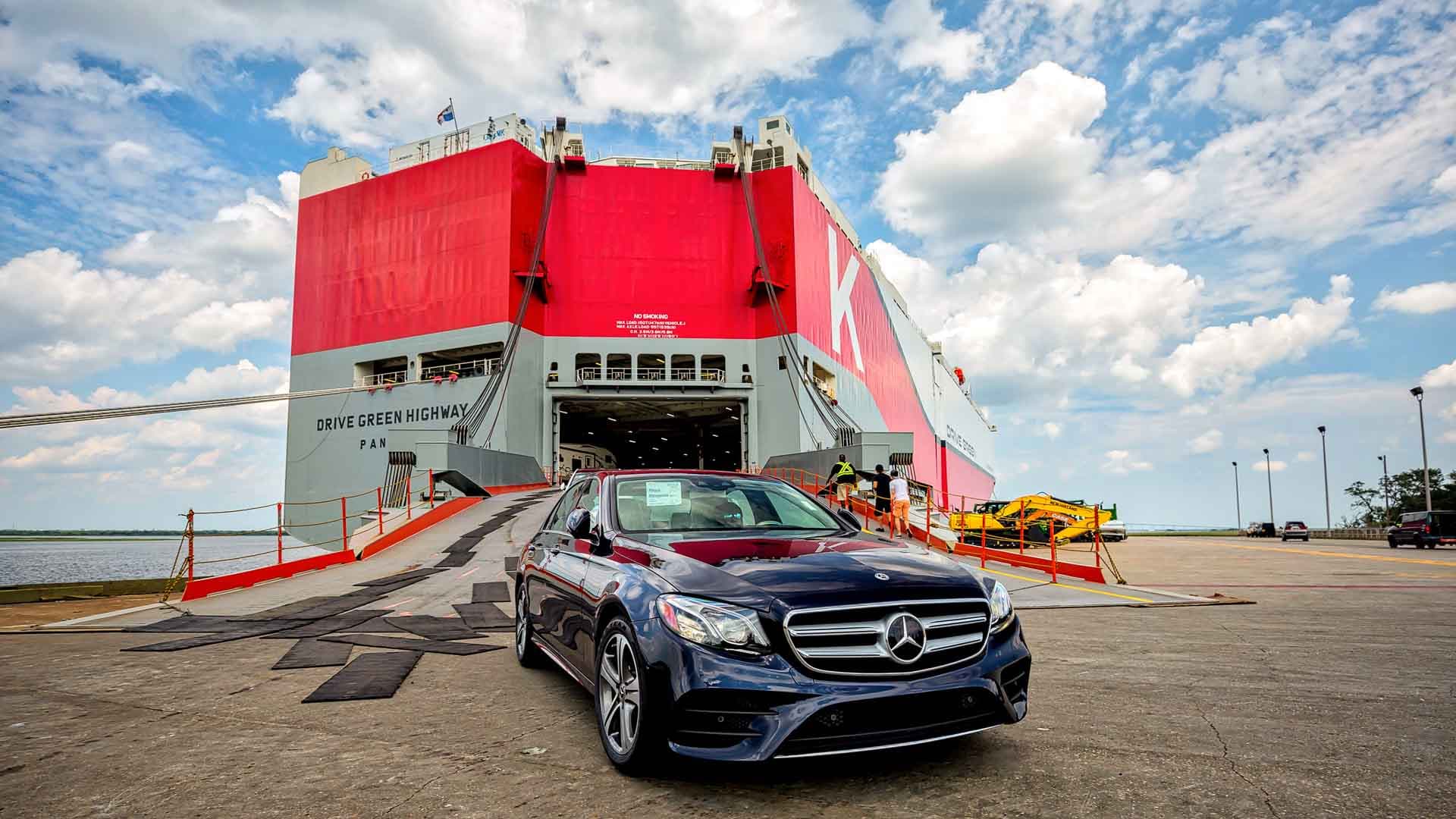
Shipping a vehicle across international borders involves more than getting a car to a port and putting it on a ship. The right transport method, export documentation, vehicle preparation, port handling, customs requirements, and destination logistics all affect how smoothly the shipment reaches its final destination.
For B2B buyers, the process becomes even more important when several vehicles are being moved for a dealership, fleet, distribution operation, rental business, NGO, or resale network. Choosing between RoRo and container shipping can affect cost, protection, handling, and scheduling.
If your business needs to transport cars overseas, understanding how international vehicle shipping works before booking a shipment can help you choose the appropriate method and avoid preventable delays.
How Are Cars Shipped Overseas?
Cars are generally shipped overseas by Roll-on/Roll-off (RoRo) vessels or inside shipping containers. Air freight is another option for certain high-value or time-sensitive vehicles, but ocean transport is generally more practical for standard international vehicle movements.
The appropriate method depends on several factors, including:
- Vehicle size and type
- Whether the vehicle runs and can be driven onto a vessel
- Number of vehicles being shipped
- Destination and available shipping routes
- Required level of protection
- Delivery schedule
- Export and import requirements
- Overall shipping budget
For B2B buyers moving multiple units, the decision is often less about finding the cheapest individual shipment and more about selecting a logistics method that works consistently across the entire procurement operation.
GMTI supports international vehicle sourcing and logistics for dealers, fleet operators, distributors, and resellers through its global automotive network.
How Car Shipping Works From Pickup to Destination
Although individual shipments vary by route and destination, the international shipping process generally follows a sequence of coordinated steps.
1. Vehicle and shipment requirements are confirmed
Before a shipment is booked, the vehicle details need to be established. This can include the make, model, year, dimensions, weight, running condition, origin, destination, and intended shipping method.
For a fleet or multi-vehicle order, the complete vehicle list is important because the number and dimensions of the vehicles can influence whether container consolidation, dedicated containers, or RoRo transport makes the most sense.
The buyer should also establish the destination port and understand whether inland transportation will be required after the vehicle arrives.
2. The export requirements are prepared
International vehicle shipping requires documentation and compliance checks before the vehicle leaves the origin country.
Depending on the countries involved and the type of transaction, documentation may include vehicle ownership documents, commercial invoices, export documentation, shipping instructions, and other paperwork required by customs or the destination country.
A missing or inaccurate document can create delays even when the physical transportation has been arranged correctly.
For a broader explanation of the export process, see GMTI's guide to how international vehicle export works.
3. The vehicle is transported to the port
Once the export requirements are in order, the vehicle needs to reach the appropriate departure port.
This may involve inland transportation from a supplier, dealership, warehouse, auction location, or other origin point. For international B2B procurement, coordinating this stage with the ocean shipment is important because missed port cutoffs can affect the sailing schedule.
4. The vehicle is loaded for international transport
The loading process depends on the selected shipping method.
With RoRo, the vehicle is driven or otherwise moved onto the vessel and secured in its designated position.
With container shipping, the vehicle is loaded into a shipping container and secured to reduce movement during transit. Depending on the shipment, a vehicle may travel in a dedicated container or share container space with other vehicles.
5. Ocean transport begins
After the vehicle is loaded and the vessel departs, the shipment travels to the destination port.
Transit time varies considerably. The origin, destination, vessel schedule, transshipment requirements, port congestion, weather, customs procedures, and inland delivery can all affect the overall timeline.
This is why an estimated sailing time should not automatically be treated as a guaranteed door-to-door delivery date.
6. Destination customs and port procedures are completed
Arrival at the destination port does not necessarily mean the vehicle is ready for collection.
Import procedures, customs clearance, duties, taxes, inspections, documentation checks, and other destination requirements may need to be completed before the vehicle can leave the port.
The exact requirements depend on the destination country's regulations and the vehicle being imported.
7. The vehicle moves to its final destination
After the necessary port and customs procedures are completed, the vehicle can be transported to the buyer's warehouse, dealership, fleet location, distribution center, or another agreed destination.
For B2B shipments, coordinating the final inland movement is particularly important when several vehicles arrive together.
RoRo vs. Auto Container Shipping: Which Is Better?
There is no universal answer because RoRo and container shipping serve different shipping requirements.
RoRo Shipping
RoRo means Roll-on/Roll-off. Vehicles are driven or moved onto a specialized vessel, secured for the voyage, and unloaded at the destination.
RoRo can be a practical choice when:
- The vehicle is operational
- The route supports RoRo service
- The vehicle does not require enclosed container protection
- Cost efficiency is a priority
- A suitable sailing schedule is available
For standard, running vehicles, RoRo is often a straightforward method of international transport.
Container Shipping
Container shipping places vehicles inside a standard shipping container rather than transporting them on an open vehicle deck.
Depending on the shipment, businesses may use dedicated or shared containers.
Container shipping can be appropriate when:
- Additional enclosure is preferred
- The vehicle is valuable or requires additional protection
- A vehicle cannot be driven onto a RoRo vessel
- Multiple vehicles can be consolidated efficiently
- The shipment requires containerized logistics
Containerization can also make sense for B2B buyers moving multiple vehicles where the shipment can be planned around container capacity and consolidation.
RoRo vs. Container at a Glance
Factor | RoRo | Container Shipping |
|---|---|---|
Loading | Vehicle moved onto vessel | Vehicle loaded inside container |
Enclosure | No enclosed container | Enclosed steel container |
Best suited to | Many standard running vehicles | Vehicles requiring containerized transport |
Multi-vehicle consolidation | Possible through RoRo bookings | Possible through shared or dedicated containers |
Non-running vehicles | May require special handling | Often more practical |
Protection | Suitable for standard vehicle transport | Additional enclosure from the elements |
Decision factors | Route, vehicle condition, schedule and cost | Vehicle type, protection, dimensions and consolidation |
The right choice should be based on the vehicle, destination, shipping route, shipment size, handling requirements, and total logistics plan rather than selecting one method automatically.
How Do Cars Get Into a Shipping Container?
For container shipping cars, the vehicle must be positioned carefully inside the container and secured so that it remains stable throughout the ocean journey.
The basic process generally involves:
- Preparing the vehicle for shipment.
- Positioning the vehicle for container loading.
- Moving the vehicle into the container using suitable loading equipment.
- Positioning it to use available container space efficiently.
- Securing the vehicle to limit movement.
- Completing the required shipping documentation.
- Sealing the container before it is transported to the vessel.
The exact loading configuration depends on the vehicle's dimensions and the type of container arrangement being used.
For B2B buyers, vehicle dimensions become especially important when several units are being shipped. SUVs, vans, commercial vehicles, and other larger vehicles may require different planning from standard passenger cars.
How Many Cars Can Fit in a Shipping Container?
The number of cars that can be loaded into a container is not a fixed figure.
It depends on:
- Container size
- Vehicle dimensions
- Vehicle height
- Vehicle width
- Vehicle length
- Loading configuration
- Required clearance
- Securing equipment
- Applicable handling requirements
A standard passenger car may require less space than a large SUV, pickup, van, or commercial vehicle. Consequently, businesses should provide accurate vehicle specifications before assuming how many units can be consolidated into a particular container.
For larger fleet purchases, calculating container utilization before booking can help avoid inefficient space allocation and unexpected logistics costs.
What Documents Are Needed to Ship a Car Overseas?
Documentation varies according to the origin country, destination country, vehicle type, and transaction.
Common documents can include:
- Vehicle title or ownership documentation
- Commercial invoice
- Purchase documentation
- Export documentation
- Shipping instructions
- Identification or business documentation where required
- Customs paperwork
- Import documentation required by the destination country
The buyer should also confirm destination-specific import requirements before the vehicle is shipped.
This is particularly important for businesses because importing a vehicle for resale, fleet use, government use, or commercial operation may involve requirements that differ from those for a private individual.
If you are researching the broader import process, GMTI's guide on how to import a car covers the steps involved in bringing a vehicle across international borders.
What Can Affect the Cost of Shipping a Car Overseas?
There is no single international car shipping price because the final cost depends on the complete shipment.
Important cost factors can include:
- Origin and destination
- Shipping method
- Vehicle dimensions and weight
- Number of vehicles
- Container requirements
- Port charges
- Inland transportation
- Customs and destination charges
- Documentation requirements
- Insurance
- Vessel schedule and availability
- Special handling requirements
A quote that only shows the ocean freight portion may not represent the total cost of moving the vehicle from its current location to its final destination.
For B2B buyers, comparing the complete logistics cost is more useful than comparing one freight line item in isolation.
How Should You Prepare a Car for Overseas Shipping?
Proper preparation helps reduce avoidable problems during the shipping process.
Before shipment, buyers should confirm:
Vehicle condition
Document the vehicle's condition before handover. Existing damage should be recorded so that the condition at the beginning of transportation is clear.
Vehicle specifications
Provide accurate make, model, dimensions, weight, and running condition information. Incorrect specifications can affect loading and shipping arrangements.
Personal items
Do not assume that personal belongings can be left inside a vehicle. Carrier and customs rules can restrict or prohibit items inside shipped vehicles.
Fuel and battery requirements
Shipping providers may have specific requirements for fuel levels, batteries, alarms, and other vehicle components. These should be confirmed with the carrier before loading.
Documentation
Make sure ownership, export, commercial, and destination documentation is ready before the shipping cutoff.
Good preparation is especially important for commercial shipments because one documentation or loading issue can affect multiple vehicles in the same procurement cycle.
What Is the Best Way to Transport Cars Overseas for a Business?
For businesses, the best method depends on the shipment rather than a one-size-fits-all answer.
A dealer moving several standard vehicles may prioritize efficient ocean transport and predictable schedules. A fleet operator may need to coordinate dozens of vehicles with procurement, inland transportation, and destination delivery. A reseller may require a combination of sourcing, export coordination, and container or RoRo shipping.
This is where an integrated sourcing and logistics approach can be more useful than arranging each stage separately.
GMTI works with B2B buyers on vehicle sourcing, fleet procurement, export coordination, and international delivery. Businesses looking for new and used vehicle sourcing can combine vehicle procurement with the logistics planning required to move those vehicles across international markets.
For organizations purchasing larger numbers of vehicles, GMTI also provides corporate fleet vehicle procurement designed around business and fleet requirements.
Shipping Commercial Vehicles Overseas
Passenger cars are not the only vehicles that can be transported internationally.
Businesses may also need to move:
- Commercial vans
- Trucks
- Fleet vehicles
- SUVs
- Pickups
- Specialty vehicles
- Other commercial automotive units
Larger vehicles require more attention to dimensions, weight, loading equipment, route availability, and container or vessel suitability.
GMTI's commercial vehicle supply and export solutions are designed for businesses sourcing vehicles for logistics, delivery, construction, and fleet operations.
What Should You Ask Before Booking International Vehicle Shipping?
Before committing to a shipment, B2B buyers should clarify:
- Which shipping method is appropriate for the vehicle?
- Is RoRo or container shipping available on the required route?
- What documents are required at origin?
- What import requirements apply at destination?
- What is included in the quoted shipping price?
- Are port and destination charges included?
- How will the vehicle reach the departure port?
- How will it move from the destination port?
- What happens if the sailing schedule changes?
- Is the vehicle condition documented before loading?
- Can multiple vehicles be consolidated?
- Who coordinates the export and logistics documentation?
Getting these questions answered before booking makes it easier to compare suppliers and understand the actual logistics commitment.
Shipping a Car Overseas: The Practical Takeaway
To transport cars overseas, you need more than ocean freight. The shipment has to be planned from the vehicle's origin through port handling, export documentation, international transportation, destination customs, and final delivery.
RoRo can be suitable for many standard running vehicles, while container shipping can provide an enclosed solution for vehicles that require different handling or protection. For multi-vehicle B2B shipments, container utilization, vehicle dimensions, route availability, and the complete logistics cost should all be considered before choosing a method.
The most reliable approach is to plan the vehicle procurement and international logistics together rather than treating shipping as an afterthought.
GMTI supports B2B vehicle buyers with global sourcing, fleet procurement, export coordination, and international automotive logistics. If your business is planning an overseas vehicle purchase, you can contact GMTI for a B2B vehicle sourcing and logistics discussion.
Frequently Asked Questions
How are cars shipped overseas?
Cars are primarily shipped overseas using RoRo vessels or shipping containers. The appropriate method depends on the vehicle, route, number of vehicles, budget, handling requirements, and destination.
Can you ship a car in a container?
Yes. A vehicle can be loaded and secured inside a shipping container for international transport. Container suitability depends on the vehicle's dimensions, condition, loading requirements, and destination route.
Is container shipping better than RoRo?
Not necessarily. RoRo can be efficient for standard running vehicles, while container shipping can be more suitable when enclosed transport, specific handling, or container consolidation is required. The better option depends on the shipment.
How long does it take to ship a car overseas?
There is no universal transit time. The route, vessel schedule, origin and destination ports, transshipment, customs clearance, and inland transportation can all affect the total timeline.
What affects the cost of shipping a car overseas?
Shipping method, destination, origin, vehicle size, number of vehicles, port charges, inland transportation, customs requirements, documentation, and special handling can all affect the final cost.
Can multiple cars be shipped together?
Yes. Multiple vehicles can be moved through appropriate RoRo arrangements or containerized shipping, depending on vehicle dimensions, route availability, and the logistics provider's loading options.
Do I need customs documentation to ship a car overseas?
Yes. International vehicle shipments require export and import documentation, although the exact documents depend on the origin country, destination country, vehicle, and transaction.
Can businesses ship commercial vehicles overseas?
Yes. Commercial vans, trucks, fleet vehicles, and other commercial vehicles can be shipped internationally when the vehicle and route meet applicable transport, export, and import requirements.